
Choose the right credit card based on your salary and maximize rewards on everyday spends like rent, bills, and UPI payments with SalarySe LevelUP
.png)
Your salary bracket determines three things that should drive your credit card choice:
Whether you'll hit reward thresholds. Most cards promise 5% on Zomato or 10% on Amazon, but only above a minimum monthly spend. If your budget doesn't naturally reach that threshold, the reward doesn't exist for you.
Whether the annual fee pays for itself. A ₹3,000 annual fee on a card that earns you ₹800 in rewards is a net loss. A ₹500 fee on a card that earns you ₹4,000 is a very good deal.
Which features apply to your actual life. Airport lounge access is great, if you fly. For someone taking the Rapid Metro to work daily, it's a benefit they'll use once a year at best.
With that framing, here's the math bracket by bracket.
At this bracket, money moves fast, and in Delhi-NCR, it moves faster than almost anywhere else in India. A 1BHK in Dwarka or Noida Extension runs ₹12,000–₹16,000. A shared flat near Cyber City Gurugram is ₹10,000–₹14,000 per person. Add the metro pass, groceries, electricity, and phone recharge, and by the 15th, the salary already feels distant.
A credit card here needs to earn you real money without costing you anything.
This is where the SalarySe LevelUP Virtual Card makes immediate sense. It's completely free, no joining fee, no annual fee, ever. On every transaction via SalarySe UPI on regular days, you earn 5 RP per ₹100 spent. And on the 1st and last day of every month, the Salary Day Bonus kicks in: 25 RP per ₹100 via SalarySe UPI.
Let's do the math for a ₹32,000 earner in Noida:
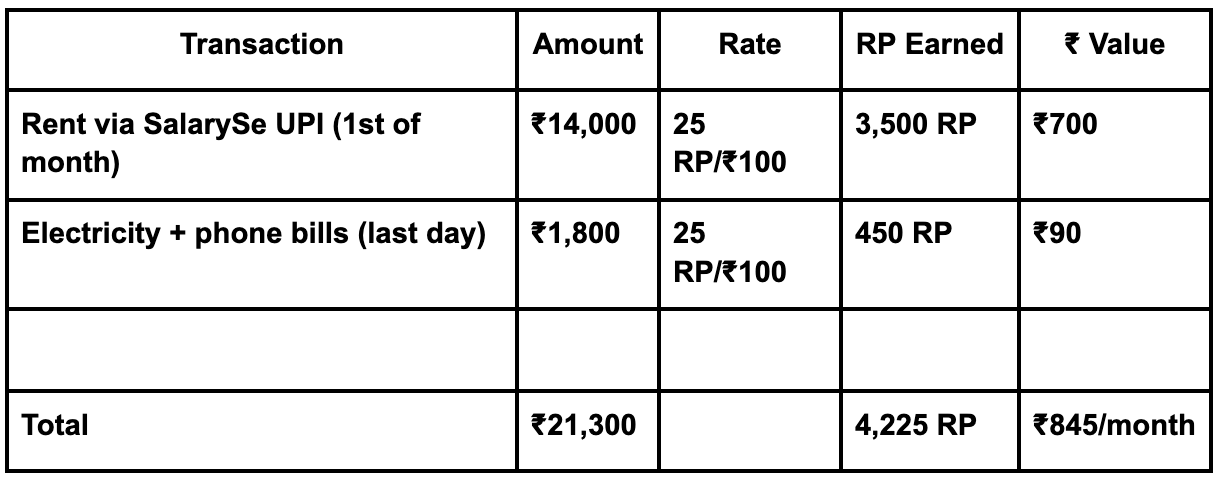
₹845 back every month from a free card. That's ₹10,140 a year, earned purely on payments you were making anyway. That's a year of Spotify and Netflix combined, a solid Myntra wardrobe refresh, or simply ₹845 back in your wallet every single month.
The magic here is in the Salary Day Bonus. Paying rent, a transaction you cannot avoid, on the 1st of the month via SalarySe UPI alone puts ₹700 back in your pocket monthly. That's ₹8,400 a year from a single recurring payment.
The verdict: Start with the free LevelUP Virtual Card. At a Delhi-NCR rent level, the math is even more compelling than national averages suggest, ₹845/month from a card that costs nothing.
At this level, you have some breathing room. You've probably upgraded from a shared flat to your own 1BHK, ₹18,000–₹24,000 in Gurugram's Sector 48 or South Noida, ₹20,000–₹26,000 if you're closer to Connaught Place or Lajpat Nagar. You're spending on dining in Cyber Hub or Hauz Khas, shopping online, maybe a weekend getaway to Rishikesh. Your monthly card spend is climbing toward a number where the rewards stop being pocket change and start being meaningful.
The LevelUP Physical Card (₹500 + GST joining fee, annual fee waived on ₹2,00,000 annual spend) is built for this stage. Here's the reward structure that matters at this bracket:
At a ₹55,000 salary in Gurugram, your monthly eligible card spend easily crosses ₹25,000–₹32,000. Let's model two realistic scenarios:
Scenario A - ₹26,000 monthly spend (just above threshold):

Scenario B - ₹32,000 monthly spend (fuller lifestyle spending):

₹1,315/month - ₹15,780 a year, from a card that costs ₹500 once. The joining fee pays for itself before the month is even over. Plus you get 1 free domestic airport lounge visit per month (unlocked automatically once your previous month's spend crosses ₹10,000 , which at this salary level is your rent alone). That's 12 complimentary lounge visits a year on top of everything else.
What does ₹15,780 in annual rewards actually look like? That's a return flight Delhi–Goa, or three months of rent utilities and internet, or a premium smartwatch from spending you were always going to do.
The verdict: The Physical Card's ₹500 fee is recovered in the first few days. After that, you're earning ₹1,195–₹1,315/month in pure value. In Delhi-NCR, where rent alone clears the Super Accelerated threshold for many people, this card works harder than anywhere else in the country.
At ₹75,000 and above in Delhi-NCR, you're likely in a 2BHK , ₹28,000–₹40,000 in Golf Course Road Gurugram, ₹25,000–₹35,000 in Greater Noida West, ₹32,000+ in South Delhi localities like Safdarjung or Malviya Nagar. Rent alone is doing serious heavy lifting on your Salary Day rewards.
Banks are aggressively competing for your wallet at this level. Premium cards with ₹5,000–₹10,000 annual fees promise golf access and concierge services. But here's the question nobody asks: what percentage of your actual monthly spending qualifies for those premium rewards? For most high-earning salaried professionals, the answer is less than you think. Rent, groceries, and utility bills make up the bulk, not international flights.
The math for an ₹85,000 earner in Gurugram spending ₹45,000/month on the card:

₹1,860 back every month. ₹22,320 a year. From a card with a ₹500 joining fee, waived entirely once you cross ₹2,00,000 in annual spend, which at this salary you'll hit in under five months.
Now compare that with a premium card charging ₹5,000 annually. You'd need to earn ₹5,000 more in rewards just to break even with LevelUP , before they offer you anything. And that premium card's rewards are typically concentrated in travel and dining categories, not on the rent and bills that account for most of your monthly outflow.
The Physical Card also includes 1 complimentary domestic lounge visit per month (12 per year) and just 1% forex markup on international transactions, versus the industry standard of 3.5%. Travel to Bangkok or Dubai twice a year and that forex saving adds up meaningfully.
What ₹22,320 in annual rewards actually gets you: Return business-class upgrade Delhi–Mumbai, or a long weekend at a Goa resort, or six months of EMI on a new phone, from spending you were always going to do.
The verdict: Unless you're taking international business-class flights monthly and genuinely need those premium travel perks, LevelUP's real returns at ₹1,860/month in Gurugram beat most cards charging 10x the fee.
Every bracket benefits from this, so it's worth explaining clearly.
On the 1st and last day of every month, transactions made via SalarySe UPI earn 25 RP per ₹100 , that's 5x the regular accelerated rate. These are the days when your salary lands, your rent is due, your major bills come in, and your biggest monthly transactions happen. LevelUP is the only credit card in India specifically designed to reward you on these exact two days.
In Delhi-NCR specifically, where rents run ₹14,000–₹35,000+ depending on your bracket, this bonus is worth far more than it would be for someone paying ₹6,000 in a Tier-2 city. The math scales with your rent, and in this city, that's a big number.
To put it in perspective: 25 RP per ₹100 at ₹0.20 per RP = effective 5% back on every rupee spent on salary day. Most premium cards don't offer 5% back on anything, let alone on rent and bill payments.

How much is 1 Reward Point worth on LevelUP? 1 Reward Point = ₹0.20 when redeemed on the SalarySe app, with no redemption fee.
What is the best credit card for a ₹30,000 salary in India? The LevelUP Virtual Card, it's free, earns 5 RP per ₹100 on SalarySe UPI, and gives 25 RP per ₹100 on Salary Day. A ₹32,000 earner in Noida paying ₹14,000 rent via SalarySe UPI on the 1st earns ₹700 in that single transaction alone, ₹845/month total, at zero cost.
What is the best credit card for a ₹50,000 salary in India? The LevelUP Physical Card. At ₹50,000–₹55,000 in Delhi-NCR, your rent alone likely pushes you past the ₹20,000 monthly spend threshold , unlocking 10 RP per ₹100 on all eligible transactions, worth ₹1,200+/month. The ₹500 joining fee is recovered in days.
What is the best credit card for a ₹1 lakh salary in India? Still the LevelUP Physical Card. At higher spend levels in Gurugram or South Delhi, the Salary Day Bonus on a ₹30,000+ rent payment generates thousands of Reward Points on the very first day of the month. ₹1,800+/month in returns from a ₹500 card that waives its own annual fee.
Is there a best credit card for salaried professionals specifically? Yes , and that's LevelUP's entire design philosophy. Most cards reward travellers or online shoppers. LevelUP rewards the way salaried Indians actually spend: via UPI, in monthly cycles, with the heaviest spending on and around salary day. In a high-rent city like Delhi-NCR, that alignment is worth thousands of rupees a year.

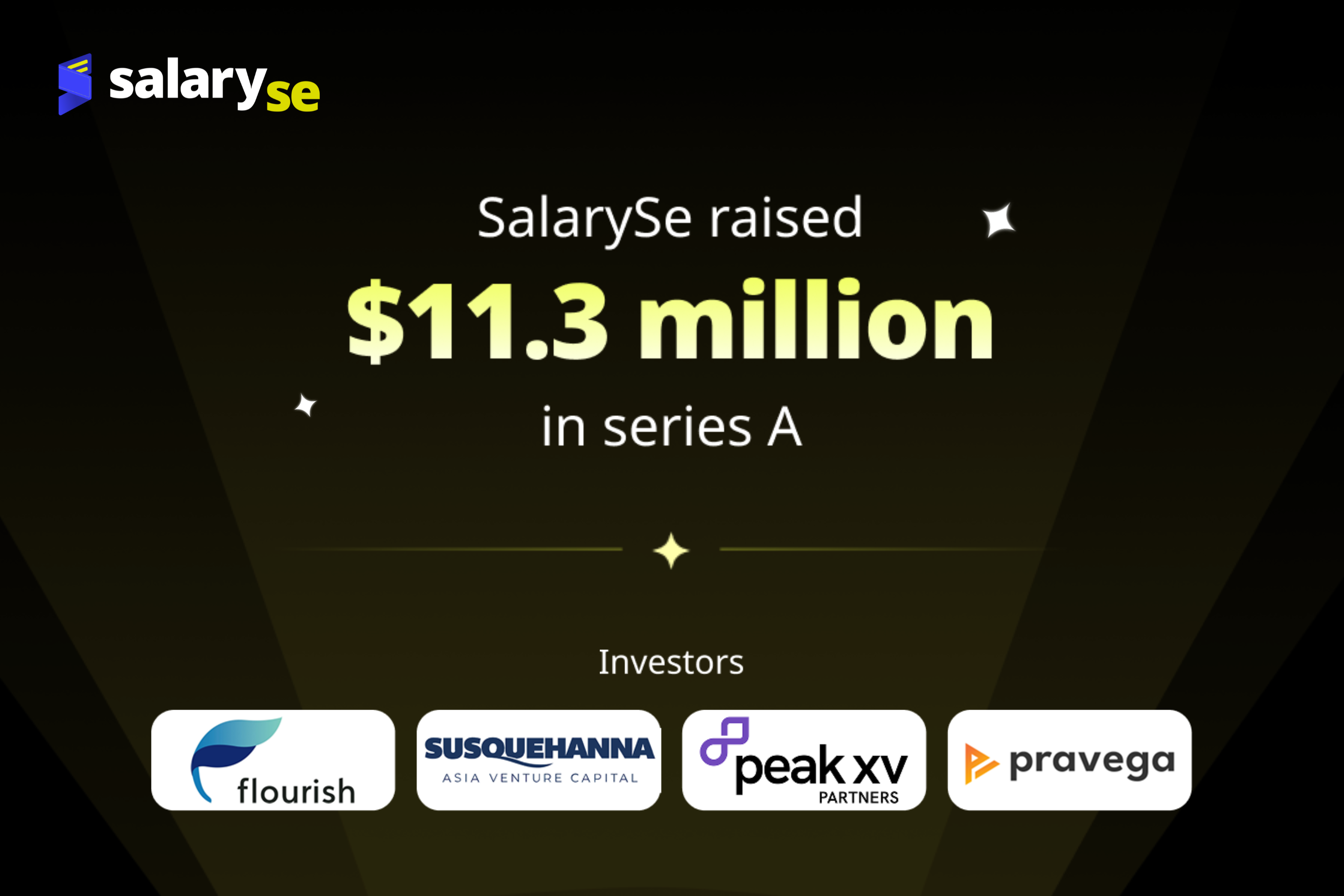
SalarySe raises $11.3M to redefine credit access for India’s workforce. Led by Flourish Ventures and SIG Venture Capital, with support from Peak XV Partners and Pravega Ventures, the funding will fuel AI-led innovation, enterprise expansion, and smarter financial solutions for salaried professionals.
Compare salary advance apps in India: loan amounts, interest rates, approval times, RBI-regulated options, and eligibility criteria for salaried employees.
Compare instant salary loans online: funding in 15 minutes to 2 seconds, loan amounts ₹5,000, ₹1 lakh, approval requirements, and interest rates across…