
The first month after moving cities is expensive, here’s how the LevelUP card turns relocation costs into real rewards on rent, bills, and everyday spends.
.png)
And why the most expensive month of your career might also be your most rewarding one
Arjun is 27. He just signed an offer letter for a product role in Gurugram, ₹65,000 a month, a title bump, and a city he's only visited twice. He's been living in Indore his whole life. His parents are proud. His friends are envious. And his bank account is quietly terrified.
Because here's the thing nobody tells you about moving cities for a job: the first 60 days are financially brutal in a way that no salary hike fully prepares you for. Before a single EMI or grocery bill from your new life kicks in, you're already down five or six figures just to get started.
This is the story of those 60 days, and what the right credit card does to them.
Arjun finds a 1BHK in Sector 56, Gurugram. It's not fancy. One bedroom, a small kitchen, a bathroom that needs a new showerhead, but it's 20 minutes from the office and the society has a gym. The landlord wants two months' security deposit upfront.
Security deposit: ₹42,000 (two months at ₹21,000/month rent).
He pays it on the 1st of the month via SalarySe UPI through LevelUP rupay card. It's the single largest transaction of his adult life so far, and it doesn't feel good. But here's what happens in the background: the LevelUP Physical Card's Salary Day Bonus is active. The 1st of the month earns 25 Reward Points per ₹100 on SalarySe UPI transactions.
On ₹42,000: 10,500 RP earned. That's ₹2,100 back.
From a security deposit. Money he had already written off as gone.
No landlord in Gurugram provides a furnished flat at this price point. Arjun needs the basics, a bed frame, a mattress, a study table, a fan, maybe a secondhand fridge off OLX. He also needs a gas cylinder connection, a pressure cooker, and enough kitchen supplies to survive until the Swiggy novelty wears off.
He spends ₹18,000 over the week. Some of it is on Amazon (online checkout). Some of it at a local furniture market off MG Road (offline POS). Some of it is a transfer to his OLX seller via UPI.
All of this qualifies for LevelUP's accelerated reward rate. Since his monthly bill hasn't yet crossed ₹20,000, he earns 5 RP per ₹100 on these transactions.
On ₹18,000: 900 RP earned. ₹180 back.
Small, but it's accumulating. And his bill is now approaching ₹60,000 for the month, which means the rest of the month everything flips to Super Accelerated.
Arjun's first month rent is due. He pays ₹21,000 via SalarySe UPI on the last day of the month. Again, Salary Day Bonus kicks in: 25 RP per ₹100.
On ₹21,000: 5,250 RP earned. ₹1,050 back.
He also pays his electricity bill (₹1,200) and Jio recharge (₹699) on the same day, last day habit forming already.
On those two: 475 RP earned. ₹95 back.
Let's total Arjun's first month in Gurugram:
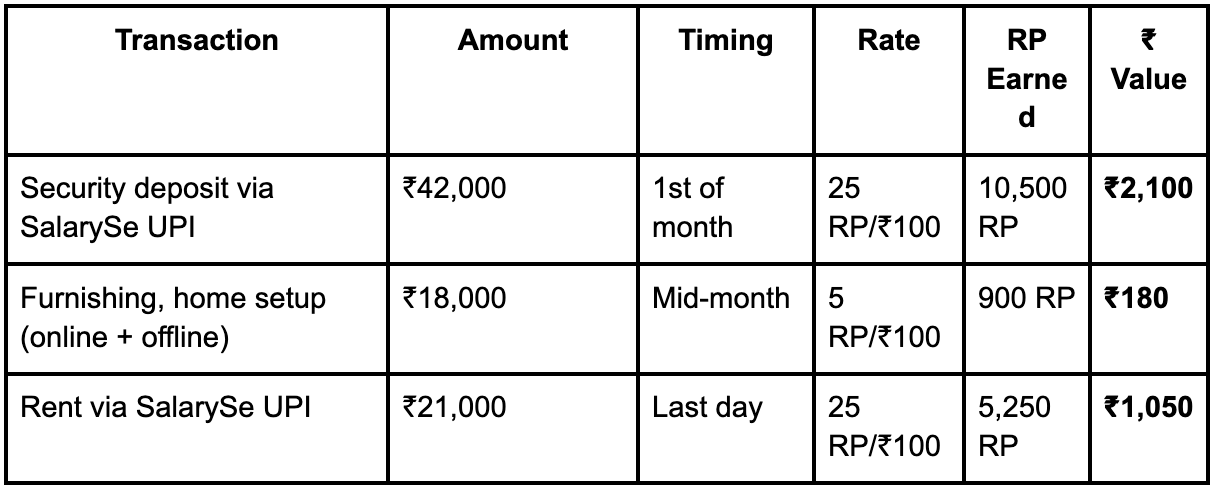
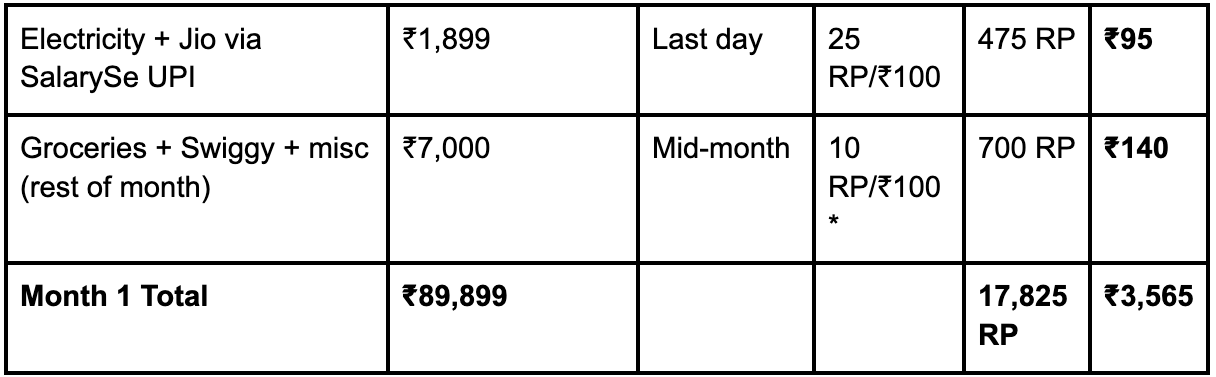
Super Accelerated (10 RP/₹100) kicks in once monthly bill crosses ₹20,000 , which happened early given the security deposit.
₹3,565 back in month one alone. On a month that felt like financial bleeding.
That's nearly seven times what a typical month will return, because the relocation itself, with its giant upfront payments, is generating reward points at the same aggressive rate as everything else.
Here's the thing. Arjun could have been using any other fintech card for this move. Let's be specific about what he'd have missed.
If he used Kiwi: Rent payments are explicitly excluded from rewards. His ₹42,000 security deposit and ₹21,000 first rent, the two biggest transactions of the month, earn him exactly ₹0.
If he used Scapia: Same story. Rent is excluded. Scapia coins also can only be redeemed for travel, not for offsetting the furniture bills he's currently staring at.
If he used a standard bank cashback card: Most cap monthly cashback at ₹500–₹1,000 total. His ₹3,565 return would be a ceiling violation.
LevelUP earns on rent because it's built around how salaried Indians actually spend, not around how aspiration-driven content imagines they spend. When the biggest payment of your month is your rent, your card should reward you for it. Full stop.
The relocation madness is over. Arjun is now just a Gurugram professional with a monthly routine. His spending normalises.
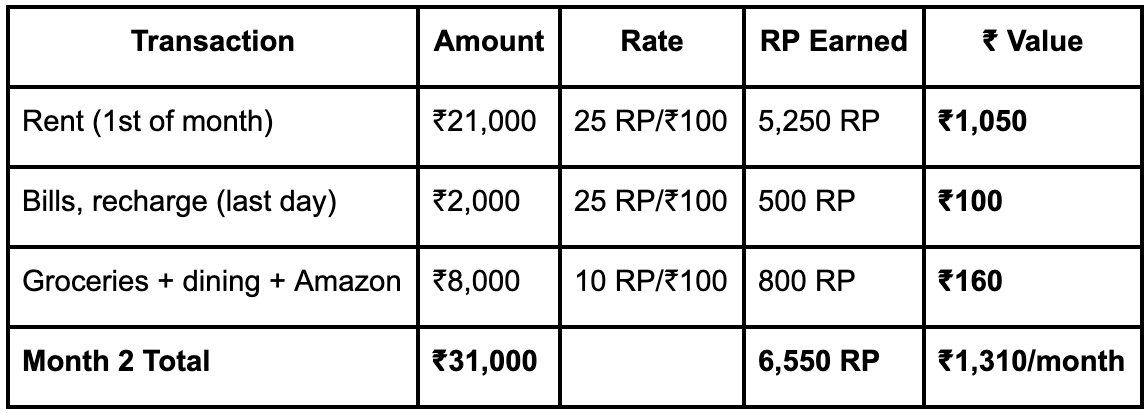
From month two onwards, Arjun earns ₹1,310/month - ₹15,720/year in reward value. His card costs ₹500 once to join, and the annual fee is waived when his annual spend crosses ₹2,00,000, which at ₹31,000/month, he hits by July.
Arjun flies back to Indore for Diwali. He's at Terminal 2, IGI Airport, killing an hour before boarding. He's heard about airport lounges his whole life but assumed they were for business class passengers and people with platinum cards that cost ₹10,000 a year.
He opens SalarySe. Checks his previous month's spend: ₹31,000. Qualifies easily for the monthly lounge access unlock (minimum ₹10,000 previous month spend required). He walks into the lounge, eats a proper meal, and sits in an actual chair.
12 visits a year. One per month. On a card that costs ₹500.
The conventional wisdom about credit cards is that you should get one when your life is stable, when you know your spending, your city, your routines. Wait until you're settled. Pick the right card carefully.
That advice costs you money.
The most rewarding time to have the right card is precisely when your financial life is most chaotic, when you're moving cities, paying deposits, buying furniture from three different places in a week, and sending money to landlords via UPI at 11pm. That's when transactions are large, frequent, and concentrated around the 1st of the month.
LevelUP's Salary Day Bonus, 25 Reward Points per ₹100 on SalarySe UPI on the 1st and last day of every month, was designed for exactly this moment. Every 100 Reward Points is worth ₹20 when redeemed on the SalarySe app. No redemption fees. No travel-only restrictions.
Arjun earned ₹3,565 in his first month in Gurugram. His card cost ₹500. He was already up ₹3,065 before he'd bought a single meal that didn't come in a Swiggy bag.
Physical Card (₹500 + GST joining fee):
Virtual Card (₹0, lifetime free):
If you're moving cities for a new job this year, or you know someone who is, the conversation about the right credit card shouldn't wait until month three when everything has settled. It should happen before the security deposit lands.
Because the painful, expensive, chaotic first month? That's actually your most rewarding one.

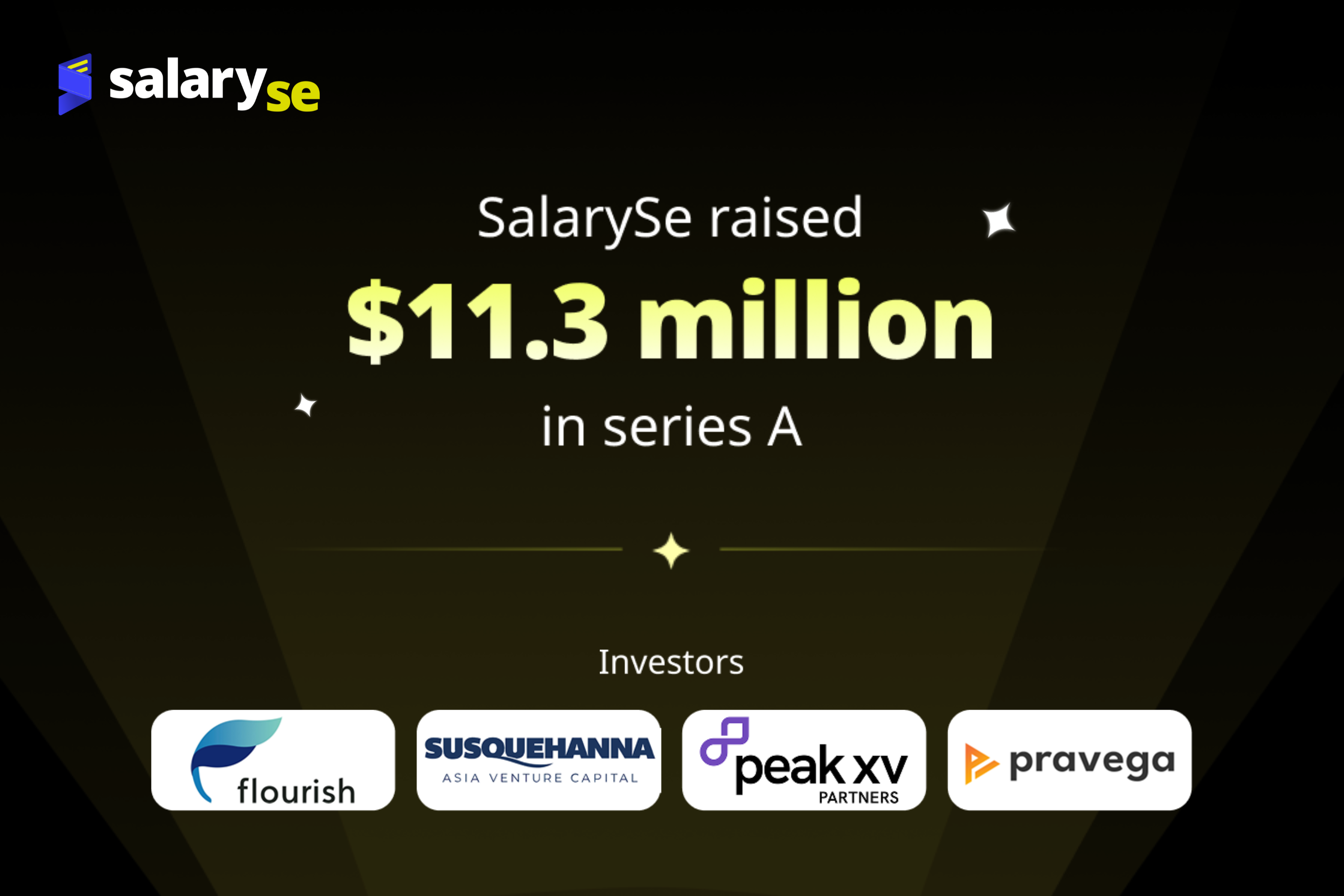
SalarySe raises $11.3M to redefine credit access for India’s workforce. Led by Flourish Ventures and SIG Venture Capital, with support from Peak XV Partners and Pravega Ventures, the funding will fuel AI-led innovation, enterprise expansion, and smarter financial solutions for salaried professionals.
Compare salary advance apps in India: loan amounts, interest rates, approval times, RBI-regulated options, and eligibility criteria for salaried employees.
Compare instant salary loans online: funding in 15 minutes to 2 seconds, loan amounts ₹5,000, ₹1 lakh, approval requirements, and interest rates across…