
SalarySe's new EPFO analysis reveals women stay in jobs 36% longer than men, yet make up only 7.6% of India's formal workforce. Here's what India's gender employment gap really costs, and why the retention myth must end.

She wasn't a flight risk. She was just never given a fair shot.
That assumption, quiet, persistent, rarely examined, has shaped hiring decisions across thousands of Indian companies for decades. The thinking goes: hire a woman, and she'll eventually leave. Family will call. Life will intervene. The investment won't stick.
So companies hedge. They favour men in hiring. They build workplaces that fail women in the formal sector. And then they point to low female labour force participation rate (FLFPR) numbers as proof that women simply aren't suited for the formal economy.
The data, it turns out, tells a completely different story.
SalarySe analysed over 47,000+ EPFO payroll records from partner companies, including top IT firms, spanning blue-collar and mid-income workers on women's participation and retention in India's formal workforce. The finding that jumped out wasn't subtle.
Women stay in their jobs 36% longer than men. Women have a median tenure of 10.6 months, compared to just 7.8 months for men. Only 36% of women leave their roles within the first six months, compared to 44% of men.
Let that sit for a moment. The demographic that companies routinely deprioritise in hiring is, statistically, the one that stays.
This is where the story gets uncomfortable
According to SalarySe's study, just one in every 13 formal sector workers is a woman, placing female workforce participation at 7.6% of all analysed EPFO records. In blue-collar and mid-income workforce segments, the gap is even more pronounced. It is a structural failure.
And it's not a retention problem. Women aren't leaving formal employment in India at alarming rates. They're simply not being let in.
The barriers to women's employment in India are well-documented but rarely confronted directly: manufacturing floors and construction sites designed entirely around male participation, hiring pipelines that filter women out before they even apply, and a quiet but pervasive assumption that female candidates come with asterisks attached.
Sectors with more structured environments tell a different story. Education sees 20.3% female participation. IT comes in at 13.2%. These aren't coincidences, they're industries that tend to offer safer environments, clearer career progression, and more predictable conditions. The lesson isn't that women prefer desk jobs. It's that women participate where the workplace environment actually supports them.
Among women who do make it into the formal workforce, something happens in their mid-career years. Between ages 35 and 45, women exit at a rate of 19.5%. Men, during the same period, exit at 12.4%.
This is the decade when careers typically accelerate, when experience compounds, when leadership roles open up, when people begin to define their professional legacy. For many women, it is also when childcare, elder care, and household management converge into an impossible juggling act.
These are not women who ran out of ambition. These are women who ran out of options.
Most workplaces still operate on a deeply flawed assumption: that a career is a straight line, uninterrupted, always climbing. That model was built for a different era and, frankly, a different demographic. When a woman needs workplace flexibility, a temporary step back, or even just a predictable schedule to manage competing responsibilities, the system frequently responds with silence, or with a door quietly closing.
This mirrors findings from the Economic Survey 2025–26, which identified that Indian women spend an average of 363 minutes daily on unpaid care work, compared to 123 minutes for men, a structural barrier that sits at the heart of India's gender employment gap.
There is another layer here that rarely enters the conversation: financial inclusion for women workers.
Most financial products, credit, insurance, savings instruments, are built around the assumption of stable, continuous employment. For workers whose careers include transitions, breaks, or irregular income, these products become inaccessible precisely when they are needed most.
A woman stepping back from work temporarily doesn't just lose income. She often loses access to credit, struggles to manage financial obligations during the gap, and returns to a financial starting line that hasn't waited for her. The system mistakes a pause for a full stop.
Building financial tools that reflect actual career paths, not idealised ones, is part of the same conversation as building inclusive workplaces for women in India.
Strip away the policy language and the diversity and inclusion frameworks, and here is what the numbers are actually telling us:
Women who enter India's formal workforce are committed, stable, and underrepresented, not because of any inherent limitation, but because the systems around them were never designed with them in mind.
The women's retention myth was always exactly that: a myth. Women were not the risk. The risk was, and continues to be, a workforce architecture that mistakes access for aptitude, and absence for inability.
India's next productivity and GDP unlock is not hiding in some new technology or policy framework. It is sitting in the 92.4% of formal workforce records that belong to men alone, in a country where that ratio makes no demographic sense.
The Economic Survey 2025–26 has set a target of raising India's FLFPR to 55% by 2050. The business case could not be clearer.
The question has never been whether women can contribute. The data settled that long ago.
The question is when we will stop building systems that make them fight to prove it.
Data sourced from SalarySe's analysis of 47,000+ EPFO employment records from partner companies, including top IT firms, across blue-collar and mid-income workforce segments.

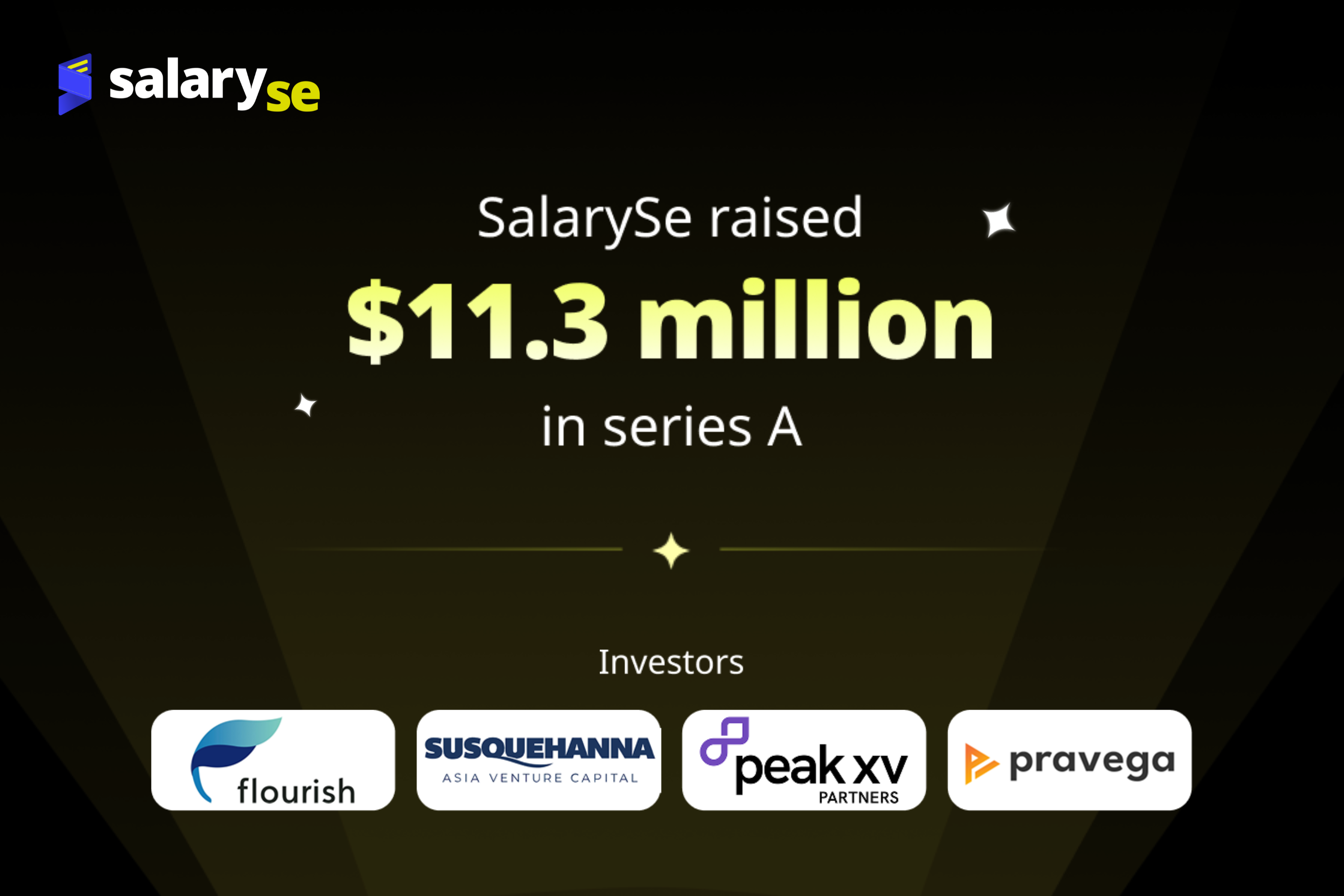
SalarySe raises $11.3M to redefine credit access for India’s workforce. Led by Flourish Ventures and SIG Venture Capital, with support from Peak XV Partners and Pravega Ventures, the funding will fuel AI-led innovation, enterprise expansion, and smarter financial solutions for salaried professionals.
Compare salary advance apps in India: loan amounts, interest rates, approval times, RBI-regulated options, and eligibility criteria for salaried employees.
Compare instant salary loans online: funding in 15 minutes to 2 seconds, loan amounts ₹5,000, ₹1 lakh, approval requirements, and interest rates across…