
India's employee Benefits landscape is shifting from slow, manual reimbursements to intelligent, real-time tax savings, and forward-thinking HR leaders are already making the switch.
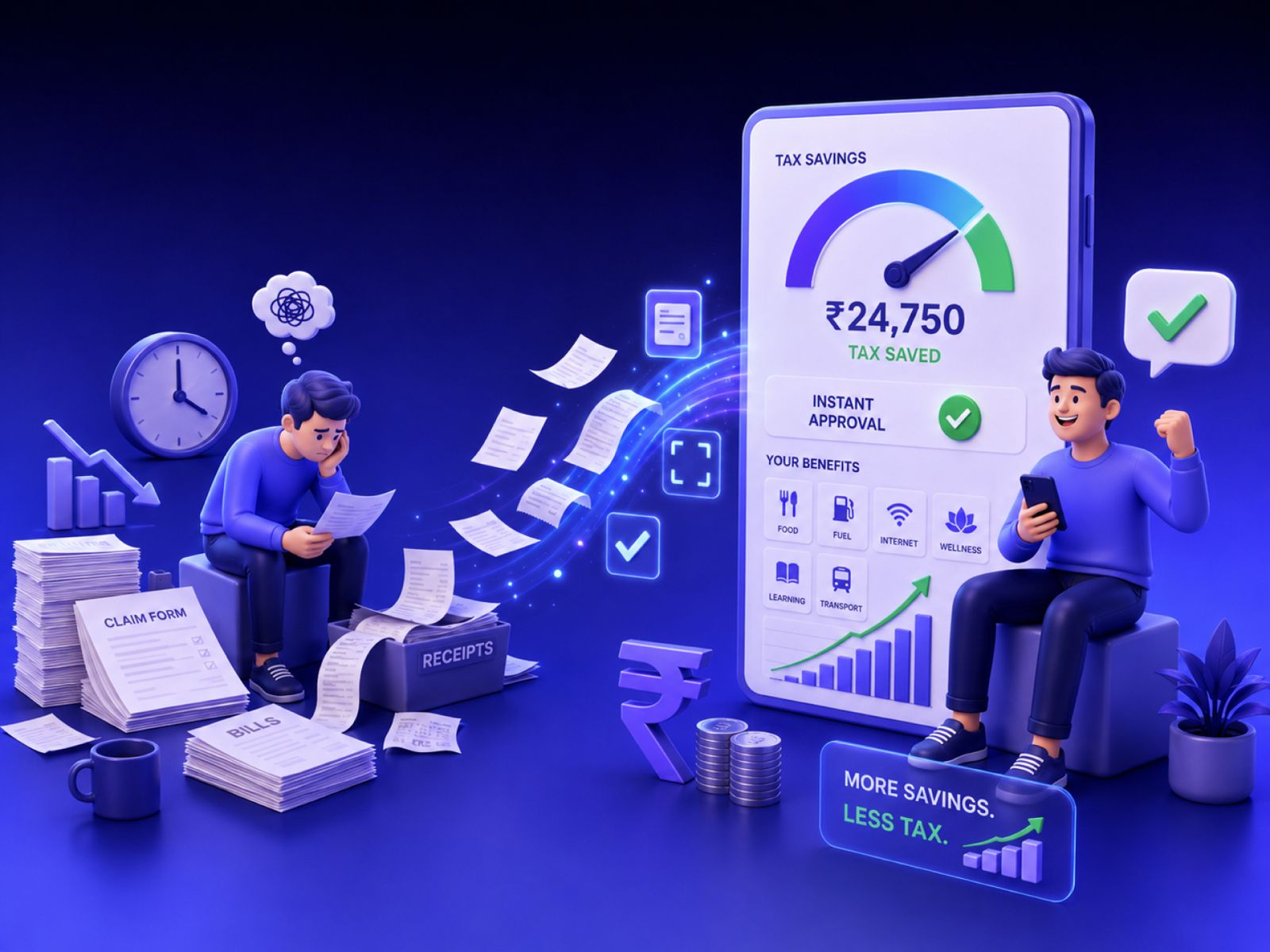
Every year, Indian employees collectively leave thousands of crores in tax savings unclaimed. Not because the provisions do not exist, but because the systems built to access them are broken. Delayed reimbursements. Manual bill submissions. Excel trackers. Approval chains that span weeks. This is the reality of employee benefits administration in most Indian enterprises today.
For HR and finance leaders, the problem is not intent. It is infrastructure.
The traditional reimbursement model was designed for a simpler era: smaller teams, paper receipts, monthly payroll cycles. Today, it is being stretched to accommodate workforces of thousands across geographies, and it is buckling under the pressure.
According to a 2024 global rewards report, over 40% of Indian companies operate with inefficient salary structures. In nearly three out of four companies, employees remain unaware of the tax-saving benefits embedded in their own CTC. The problem is not that employees do not want to save tax. It is that the process of doing so is opaque, cumbersome, and entirely manual.
For the organisation, this translates to compliance risk, administrative overhead, and a workforce that is unknowingly underpaid relative to its own compensation structure. True compensation optimisation cannot happen inside a system designed around paper receipts and month-end reconciliation.
The defining shift in modern benefits infrastructure is timing. Reimbursements are post-facto by design. Employees spend first, claim later, and receive money weeks after the fact. This creates a capital block for the employee and a verification burden for HR.
Flexi Benefits invert this model entirely. Instead of restructuring salary after the fact, they allow employees to allocate a portion of their pre-tax CTC toward defined expense categories: meals, fuel, internet, fitness, medical, at the point of spend, in real time. The tax benefit is immediate. The compliance is automatic. The capital block is eliminated.
For the employer, this is not a new cost. It is a smarter architecture for the compensation that already exists.
The gap between traditional Flexi Benefits and what is now possible is not incremental. It is categorical.
Earlier implementations of flexi benefits still required employees to choose components upfront, submit claims manually, and wait for HR to verify. The intelligence was limited, and adoption suffered because the process still demanded effort.
AI-powered Flexi Benefits platforms work differently. Rather than asking employees to navigate tax rules and benefit categories on their own, the system learns from financial behaviour patterns and automates the heavy lifting. This is where consumption intelligence becomes the engine beneath the surface.
When a platform analyses how employees actually spend, across food, fuel, communication, wellness, and more, it can automatically detect benefit eligibility, suggest the right allocation mix, and flag optimisation opportunities that would never surface through a manual process. An employee who regularly spends on fuel does not need to file a claim. The system recognises the pattern, applies the benefit, and reflects the saving in real time.
For HR and finance teams, this means the compliance burden shifts from people to systems. Benefit utilisation data, tax calculations, and audit trails are generated automatically, without manual audits or month-end scrambles.
The result is a materially different experience for the employee and a materially lower operational load for the organisation.
Consider an employee with a CTC of Rs. 12 LPA. Under a rigid salary structure, the entirety of that compensation is taxed as income. Under a well-structured Flexi Benefits programme, a meaningful portion across food allowance, fuel, medical, and communication can be allocated pre-tax, resulting in a higher in-hand salary without a single rupee of additional cost to the employer.
The difference between these two scenarios is not compensation. It is architecture.
With platforms like SalarySe, this architecture is deployable at enterprise scale. It integrates directly into existing payroll systems, surfaces real-time tax savings for employees through a mobile-first interface, and gives finance teams a live dashboard of utilisation and compliance. Employees see their savings as they spend. HR teams see everything they need without chasing anyone.
This is compensation optimisation as a living, breathing system rather than a once-a-year salary revision exercise.
For CHROs and CFOs evaluating their total rewards strategy, the question is no longer whether to offer Flexi Benefits. The question is how long they can afford not to.
Organisations that have moved from reimbursement models to AI-powered Flexi Benefits platforms report measurably higher employee satisfaction, stronger engagement with compensation, and significantly lower HR operational load. When employees understand and experience the value of their benefits in real time, compensation becomes a retention tool, not just a payroll line item.
There is a second dimension worth noting for finance leaders. Compensation optimisation through Flexi Benefits also reduces the employer's PF liability on restructured salary components, creating a cost efficiency that compounds at scale. For a workforce of 500 or more, this is not a rounding error. It is a meaningful line item that belongs in any CFO's benefits review.
Salary structures have not changed much in decades. But the tools available to optimise them have transformed entirely. AI is now doing what spreadsheets and reimbursement portals never could: reading financial behaviour, identifying opportunities, and acting on them automatically.
The enterprises that act on this shift today will not just reduce tax liability for their employees. They will redefine what compensation means inside their organisations, turning a static cost into an intelligent, always-on financial ecosystem that works for every employee, every month.

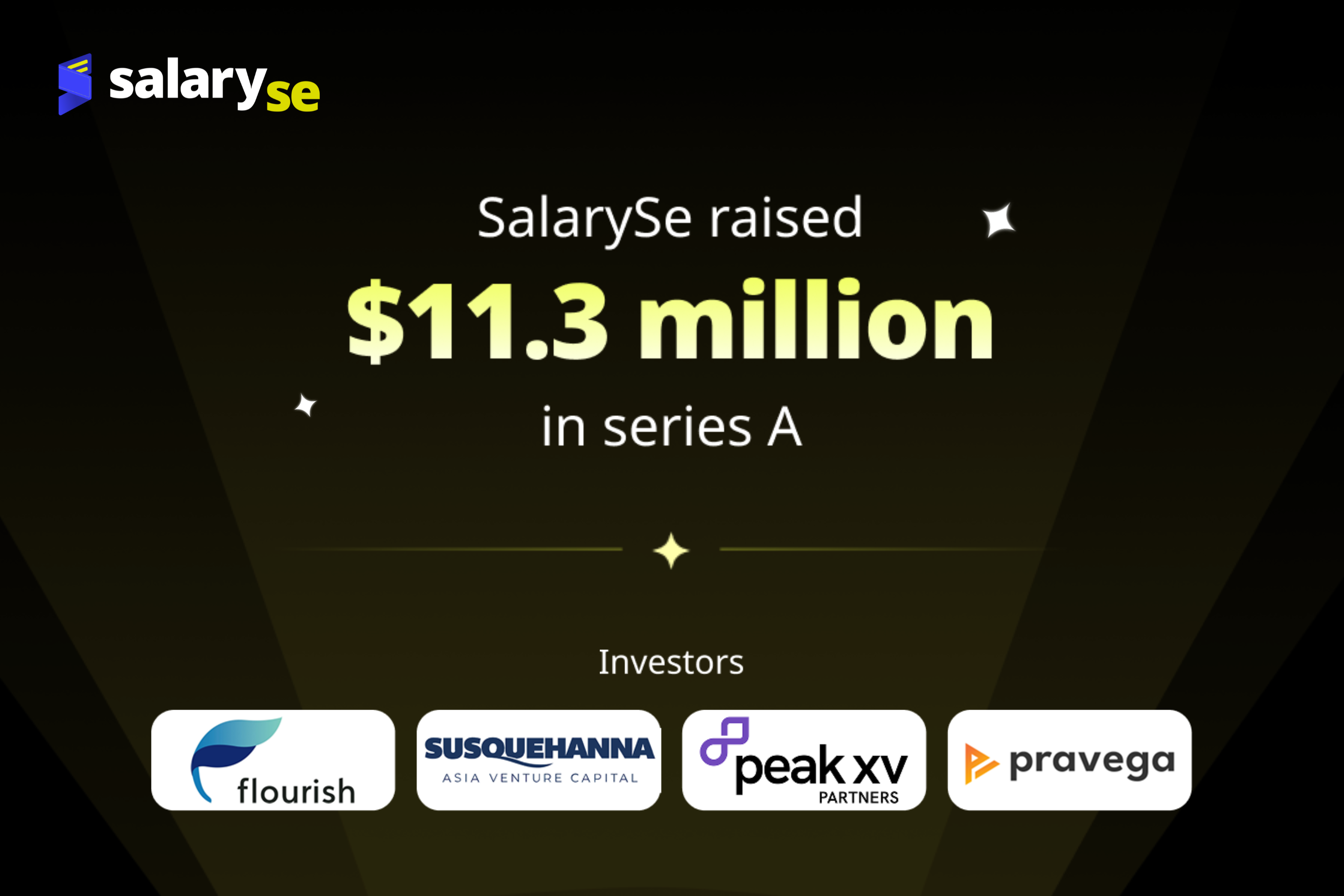
SalarySe raises $11.3M to redefine credit access for India’s workforce. Led by Flourish Ventures and SIG Venture Capital, with support from Peak XV Partners and Pravega Ventures, the funding will fuel AI-led innovation, enterprise expansion, and smarter financial solutions for salaried professionals.
Compare salary advance apps in India: loan amounts, interest rates, approval times, RBI-regulated options, and eligibility criteria for salaried employees.
Compare instant salary loans online: funding in 15 minutes to 2 seconds, loan amounts ₹5,000, ₹1 lakh, approval requirements, and interest rates across…