
What organisations are calling quiet quitting is often financial anxiety presenting as disengagement. Smart employers are addressing the root cause, not the symptom.

The discourse around quiet quitting has generated significant attention across boardrooms and HR leadership teams over the past two years. Employees are pulling back. Doing the minimum. Disengaging from the work. And the most common organisational response has been to interrogate culture, leadership, or purpose alignment.
These are not irrelevant factors. But they are missing the most immediate, measurable driver of employee disengagement in India's workforce today: financial stress.
India's middle-income salaried workforce lives in a structurally precarious financial position that rarely surfaces in employee surveys but shows up unmistakably in productivity and engagement metrics.
A significant proportion of salaried employees across Indian enterprises run out of money before the month ends, not because they are irresponsible, but because their salary structure is rigid, their tax liability is higher than necessary, and their access to short-term liquidity is limited to high-cost credit card debt or informal borrowing. The psychological weight of this financial uncertainty does not disappear when an employee logs into a work meeting. It travels with them.
The research on financial stress and workplace performance is unambiguous. Employees who are financially anxious are measurably less focused, less creative, and less willing to take the risks that drive organisational growth. They are also significantly more likely to be actively or passively looking for alternative employment.
For Indian enterprises, this has a compounding effect. Attrition in financially stressed employees tends to be concentrated in the mid-tenure band, employees who have accumulated enough institutional knowledge to be genuinely productive, but not enough financial stability to feel secure. These are precisely the people organisations can least afford to lose.
Here is what is often missed in conversations about employee financial wellness: employers are uniquely positioned to address it because they control the instrument at the centre of every employee's financial life: salary.
This is not about increasing compensation budgets. It is about making compensation work better. A salary that is optimally structured, with tax-efficient components, access to liquidity between pay cycles, and tools that help employees manage their money actively, is a materially more powerful financial instrument than the same number sitting in a rigid, fully taxed CTC structure.
Employers who deploy intelligent financial wellbeing tools, early salary access, Flexi Benefits, device leasing, UPI rewards, are not adding a line to the Benefits catalogue. They are addressing the root cause of the disengagement problem.
At SalarySe, we have seen consistently that employees who access structured financial wellbeing benefits through their employers demonstrate higher engagement scores, lower absenteeism, and meaningfully longer tenure. The mechanism is straightforward: when financial anxiety is reduced, cognitive bandwidth is freed. Employees show up more fully, not because the culture changed, but because their material reality improved.
Employers who address financial stress do so through targeted interventions, each solving a distinct problem in the employee's financial life.
Flexi Benefits solve the tax inefficiency problem. By restructuring existing CTC into tax-exempt salary components, food, fuel, medical, communication, employees take home Rs 6,000 to Rs 12,000 more every month. The employer's cost does not change. The employee's financial reality does, and it does so every single month.
Earned Wage Access solves the liquidity problem. Instead of waiting for the monthly pay cycle, and reaching for a credit card or informal loan when money runs short, employees can access wages they have already earned, on demand. This is not borrowing. It is simply removing the artificial lag between work done and money received, which is where mid-month financial anxiety originates.
Device Leasing solves the asset access problem. Employees who need a quality phone or laptop for work often absorb that cost personally, either upfront or through personal debt. Salary-linked device leasing gives access to premium devices at up to 40% less than market price through a combination of income tax savings and GST benefits, converting a personal financial burden into a structured, cost-efficient employer benefit.
UPI Rewards and Credit Access solve the everyday cashflow problem. Meaningful rewards on routine spending, groceries, fuel, utilities, and access to responsible, salary linked credit give employees a financial cushion on transactions they are making regardless. It is not a change in behaviour. It is a change in what that behaviour yields financially.
For HR leaders, the implication is significant. Before investing in the next engagement initiative, culture workshop, or pulse survey, it is worth asking a more fundamental question: are your employees financially secure enough to be fully present at work?
Quiet quitting is a symptom. Financial stress is the disease. Organisations that treat it as such, deploying compensation architecture and financial wellbeing tools as strategic retention instruments, will find that engagement follows. Not as a result of inspiration, but as a result of stability.

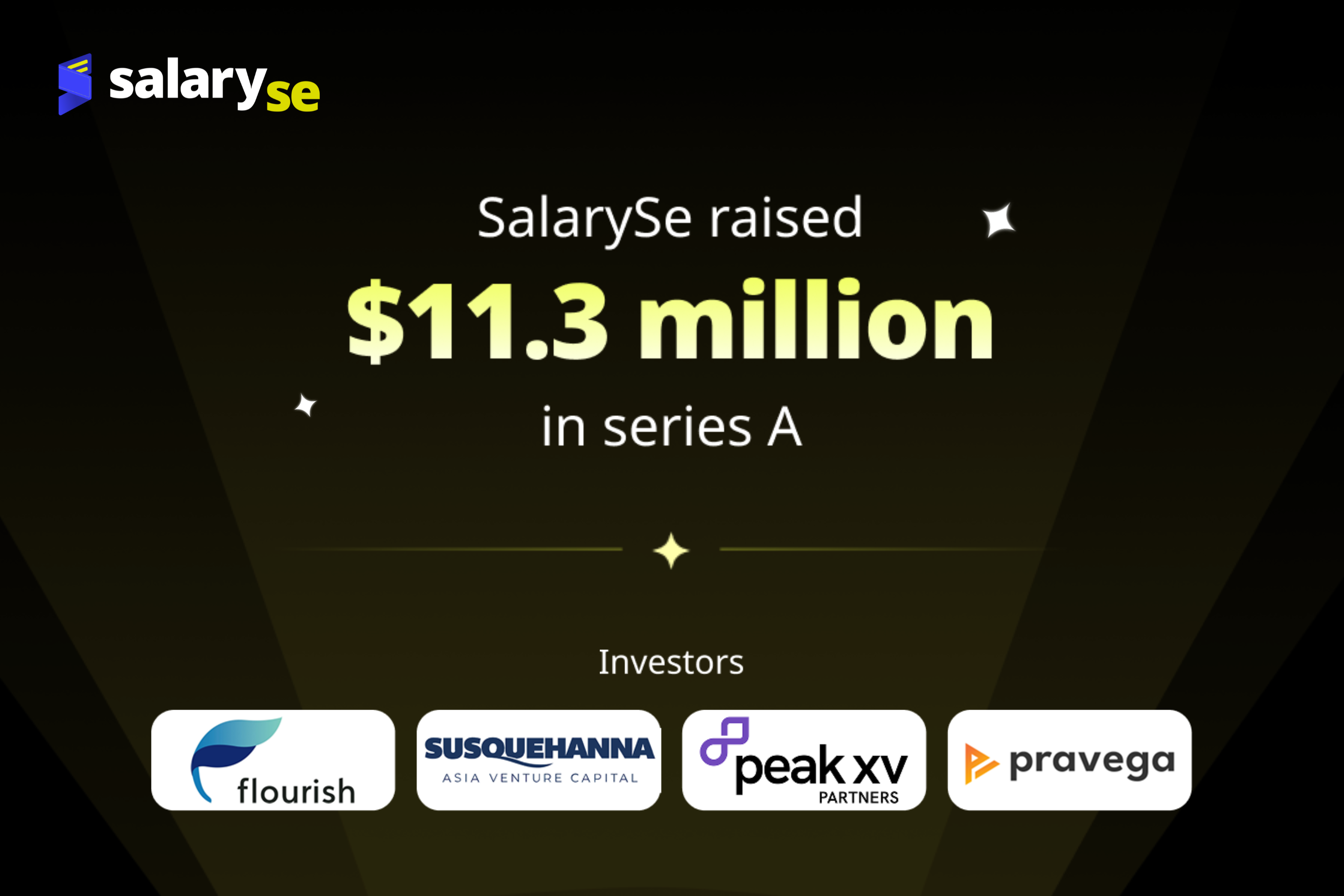
SalarySe raises $11.3M to redefine credit access for India’s workforce. Led by Flourish Ventures and SIG Venture Capital, with support from Peak XV Partners and Pravega Ventures, the funding will fuel AI-led innovation, enterprise expansion, and smarter financial solutions for salaried professionals.
Compare salary advance apps in India: loan amounts, interest rates, approval times, RBI-regulated options, and eligibility criteria for salaried employees.
Compare instant salary loans online: funding in 15 minutes to 2 seconds, loan amounts ₹5,000, ₹1 lakh, approval requirements, and interest rates across…